
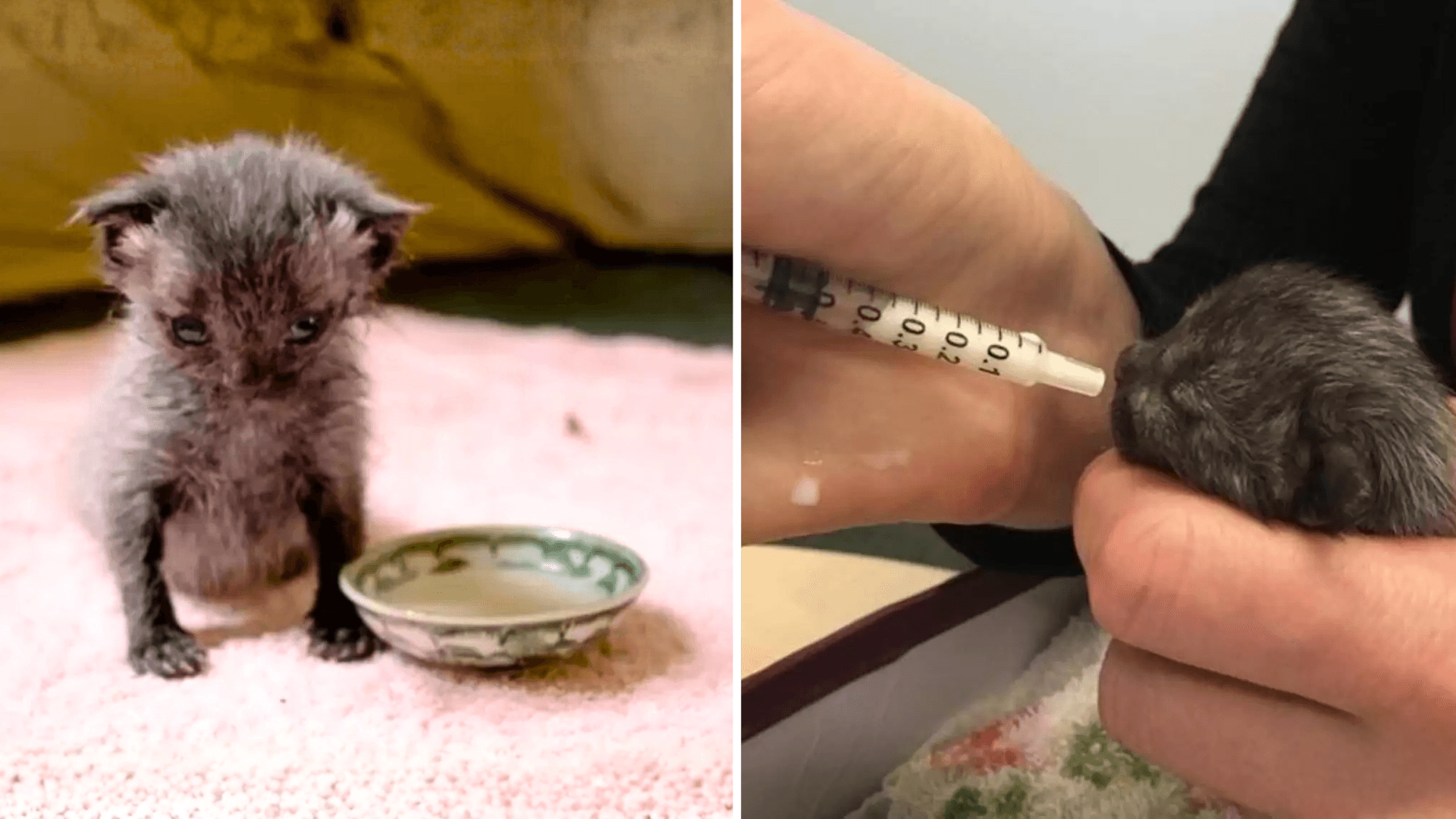
When Kathryn van Beek was walking home through a downpour in Auckland, New Zealand, she didn’t expect to stumble upon anything more than a puddle.
But as the rain hammered down, she spotted something so tiny and frail moving across the road that she had to stop and look twice.
At first glance, she thought it might be a mouse, it was that small.
“I wasn’t even sure he was a cat,” van Beek said. “He looked much more like a mouse.”
But when she crouched down for a closer look, she realized what she was seeing, a newborn kitten, completely drenched and trembling.
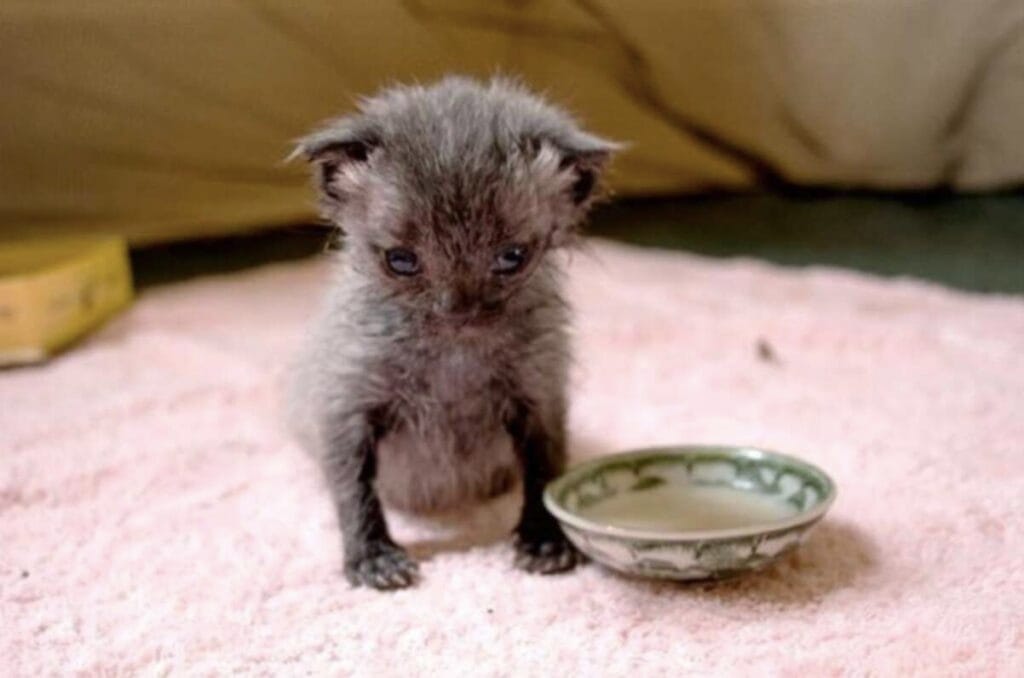
He was so young that his eyes were still closed, and there wasn’t a sign of his mother anywhere.
In that moment, van Beek knew she couldn’t leave him behind. She scooped up the tiny creature, tucked him safely into her jacket, and hurried home.
The odds weren’t great, but she was determined to give him a fighting chance.
She named him Bruce.
At first, things seemed hopeful.
Bruce was small but responsive, and van Beek threw herself into caring for him, late-night feedings, warm blankets, and endless research on how to care for newborn kittens.
But soon, Bruce’s health began to decline.
“I thought his chances of survival were pretty good,” she said. “But over the next few days, he got sicker and sicker.”
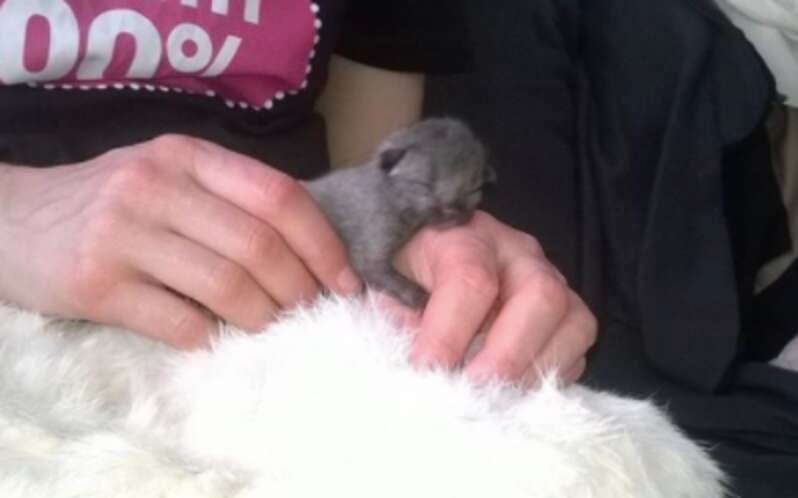
For a moment, it seemed like Bruce might not make it.
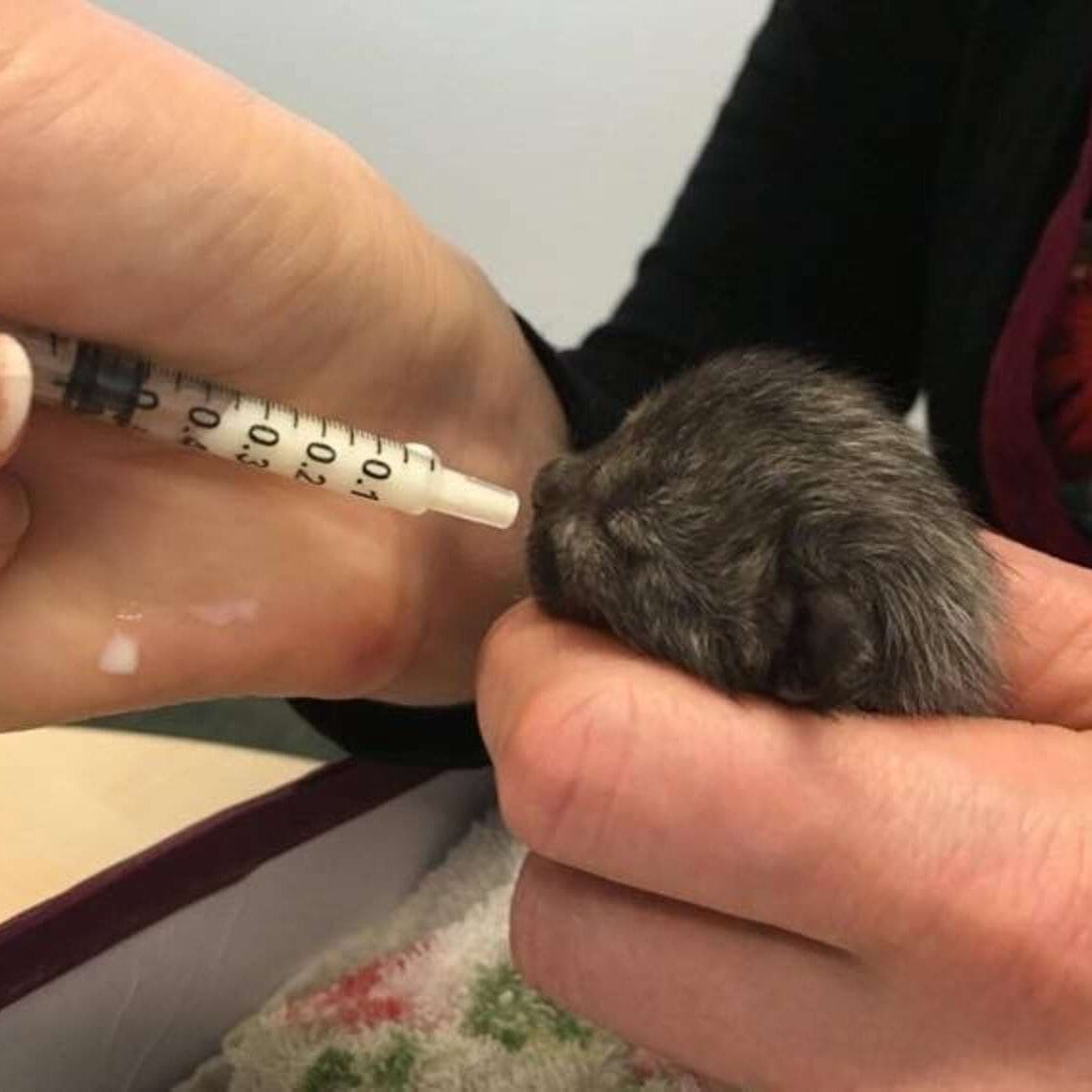
He was fragile, barely strong enough to drink from the bottle.
But van Beek refused to give up. She set alarms for every two hours to feed him and even arranged for a trusted babysitter to care for him while she was at work.
“I’d pack him up with a giant ‘mom bag,’ drop him off before work, and pick him up afterwards,” she said. “The round-the-clock feeds were a challenge.”
Days turned into weeks, and Bruce began to hold on.
His weight crept up little by little, and the sparkle of life started to appear in his eyes.
At six weeks old, something amazing happened, his fur began to change.
When she first found him, Bruce’s coat was a soft gray, but as he grew stronger, the color started darkening.
Soon, he was transforming into a sleek black kitten.
The vet explained that Bruce had been born with something called “fever coat,” a temporary condition caused by stress or illness in the mother during pregnancy.
The gray fur would eventually fade, and it did.
By the time Bruce was three months old, he looked like a completely different cat. His once pale fur had turned jet black, and his tiny frame had filled out with energy and confidence.
“He was prancing around like a mad teenager,” van Beek said with a laugh.
“That’s when I really knew he was out of the woods.”
Now, years later, Bruce is barely recognizable as the fragile kitten who once fought for every breath.
He’s a bold, playful cat who spends his days chasing toys, exploring the outdoors, and occasionally picking playful fights with his older sister, Jager.
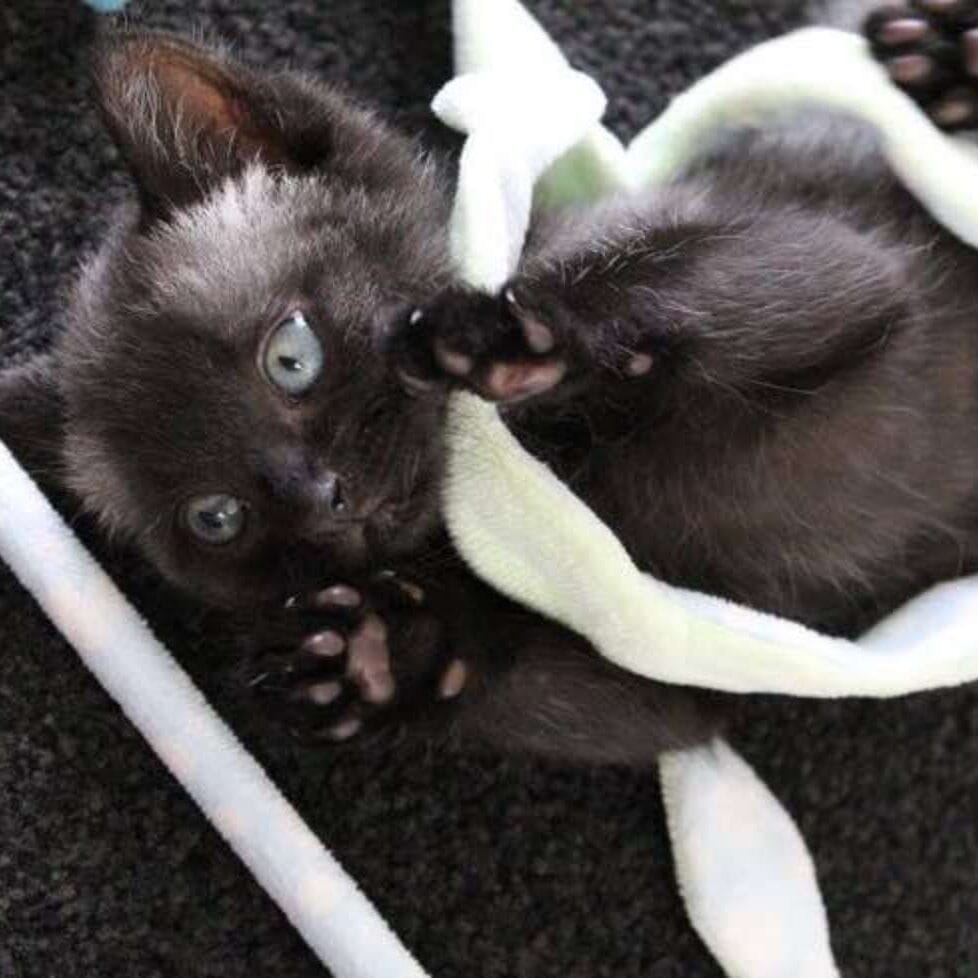
“He’s very frisky and a very independent, free spirit,” van Beek said.
“We often joke that you can take the cat off the streets, but you can’t take the street out of the cat.”
Bruce has also inspired something much bigger than himself.
His story touched so many hearts that van Beek decided to turn it into a children’s book, a tale about survival, hope, and the special bond between a rescuer and her rescue.
Through every page and every photograph, Bruce’s journey serves as a reminder that even the smallest lives can make the biggest impact.
Today, Bruce’s personality still shines through, mischievous yet loving, independent but always ready for a cuddle.
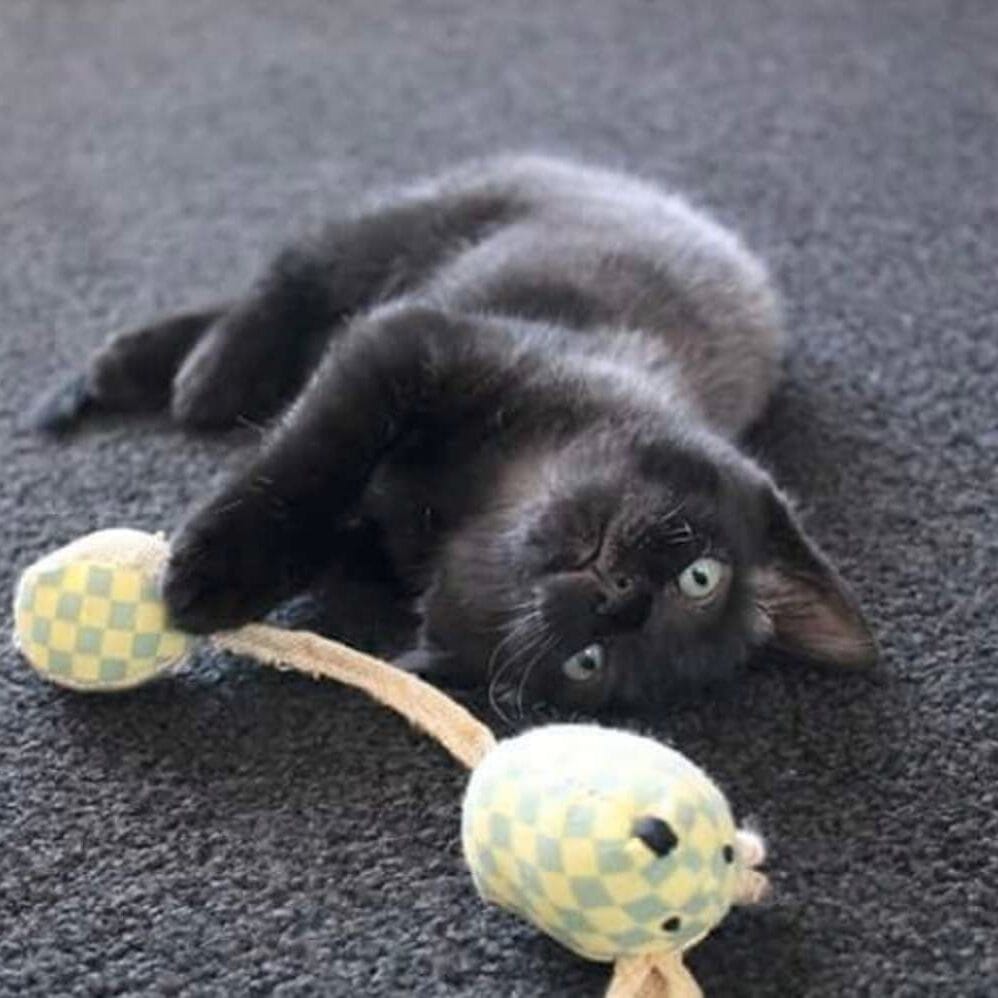
He might not remember the storm that nearly took his life, but van Beek never forgets it.
“He really gives me that bursting heart feeling when I look at him,” she said. “I feel so proud of everything he’s overcome. We’re lucky to have found one another.”
From a helpless newborn on a rain-soaked road to a strong, spirited cat ruling his home.
Bruce’s story is living proof that sometimes, the smallest rescues can turn into the biggest miracles.