
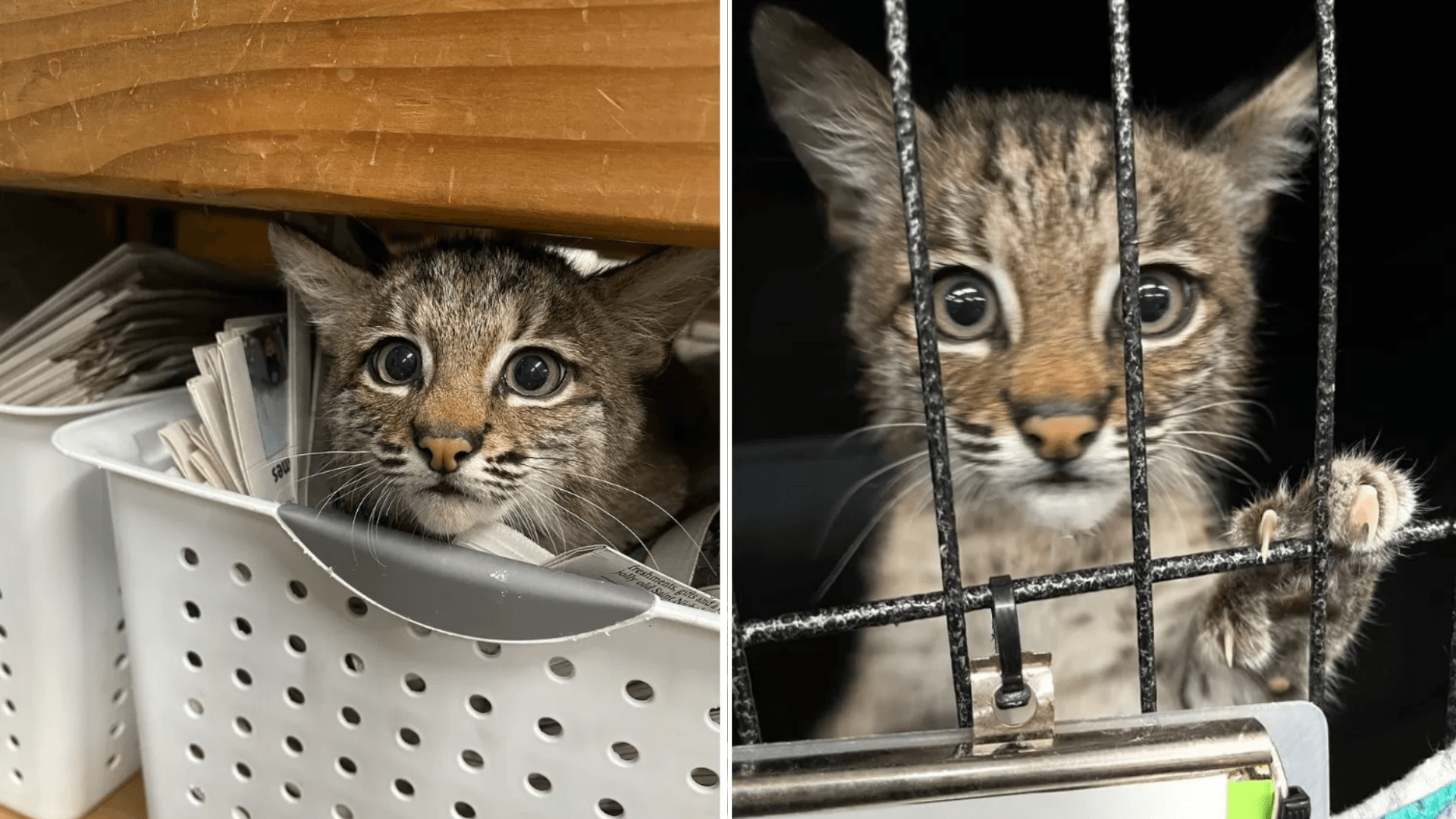
When rescuers at Wild Heart Ranch in Oklahoma picked up the phone one morning, they weren’t expecting to hear about a wild animal that had been living like a family pet.
But on the other end of the line was a caller explaining they’d been caring for a bobcat for weeks, feeding it, playing with it, and even letting it mingle with their children.
By the time the young bobcat arrived at the rehabilitation center, the damage was clear. She wasn’t wild anymore.
“She came to us completely imprinted on humans,” said Annette King, founder of Wild Heart Ranch.
“The person who brought her in said they’d had her for two weeks.
But based on her behavior, that wasn’t true.
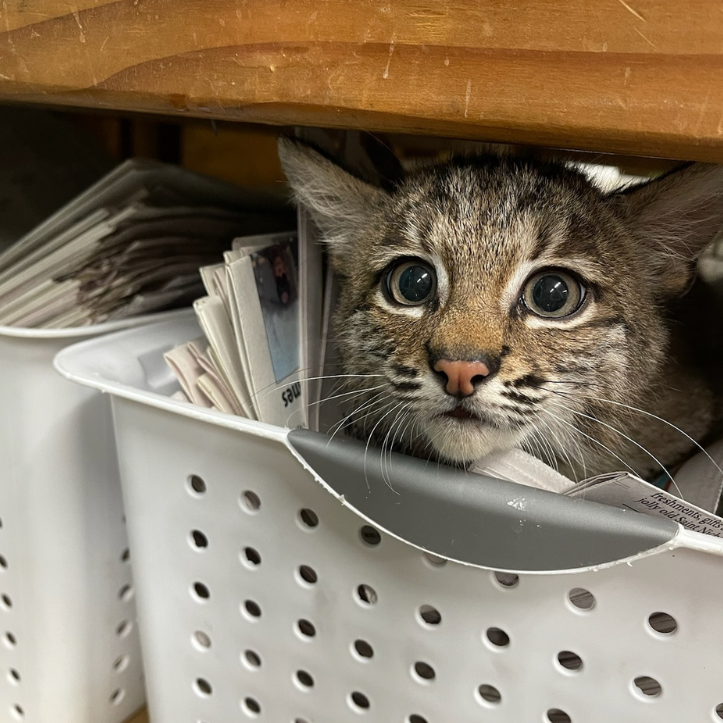
She’d clearly been raised in a home for months.”
The bobcat didn’t hiss or hide when staff approached. Instead, she behaved more like a house cat, curious, calm, and far too trusting of people.
King said she likely spent most of her young life surrounded by children and household noises, becoming comfortable in an environment no wild animal should ever see as normal.
“This little one thought she belonged indoors,” King said. “She had lost her natural fear of humans, which makes survival in the wild almost impossible.”
Wild Heart Ranch, a nonprofit facility set on 140 acres in northeastern Oklahoma, has been rescuing and rehabilitating wild animals since 1996.
Over the years, the team has released more than 100,000 creatures back into their natural habitats. But cases like this are becoming more common and more complicated.
The rules around owning or handling wild animals, especially bobcats, are strict in Oklahoma.
While a few states, such as Alabama, Nevada, and North Carolina, allow private ownership of bobcats without permits.
For everyday citizens, keeping a wild bobcat as a pet is completely illegal.
Unfortunately, good intentions often lead to bad outcomes.
“The public needs to understand that keeping wildlife for longer than the legal 24-hour period can put their lives at risk,” King explained.
“People think they’re helping, but they’re actually making it harder for us to return these animals to the wild.”
Every wild animal taken in by the ranch must be ready for release within six months. If not, state law requires euthanasia.
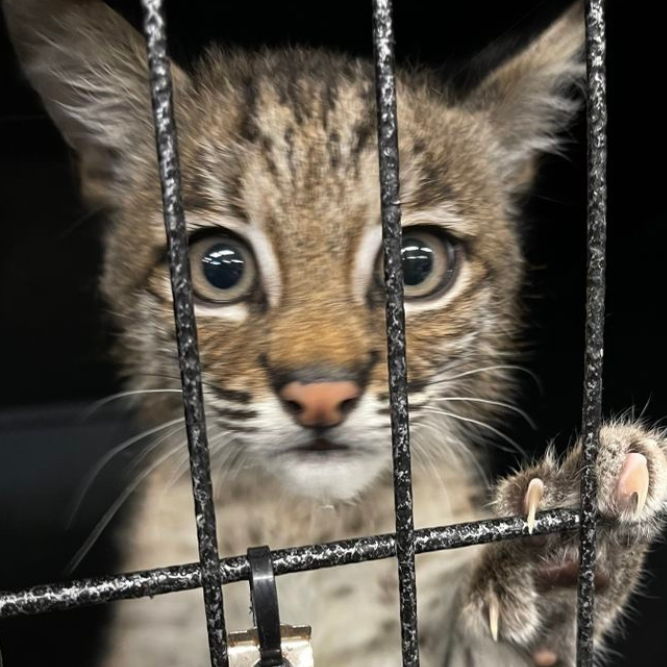
In the past, King could transfer non-releasable animals to educational programs or zoos, but that option has become increasingly difficult under new regulations.
“I will not euthanize a healthy animal that could live happily in captivity,” King said.
“But I also don’t believe any wild animal should spend its life behind bars. It’s always a painful choice between two difficult options.”
Determined to give the young bobcat another chance at freedom, King came up with a plan.
She reached out to another licensed rehabilitator who happened to be caring for a wild-born bobcat cub of the same age.
The hope was that by living and bonding with the other cub, one that still had its natural instincts, the domesticated bobcat would slowly relearn how to be wild.
“Wildness is contagious,” King said.
“When animals live and learn from each other, they start to pick up the behaviors they’ve forgotten. This pairing gives her the best shot at returning to nature.”
The process will take time.
The two cubs are now being kept away from humans as much as possible, minimizing contact so they can form a bond with each other rather than relying on people for comfort.
If all goes well, both will eventually be released together once they’re strong and self-sufficient.
For King and her team, it’s a hopeful ending to what could have been a tragedy. But it’s also a reminder of how easily well-meaning people can harm the animals they’re trying to protect.
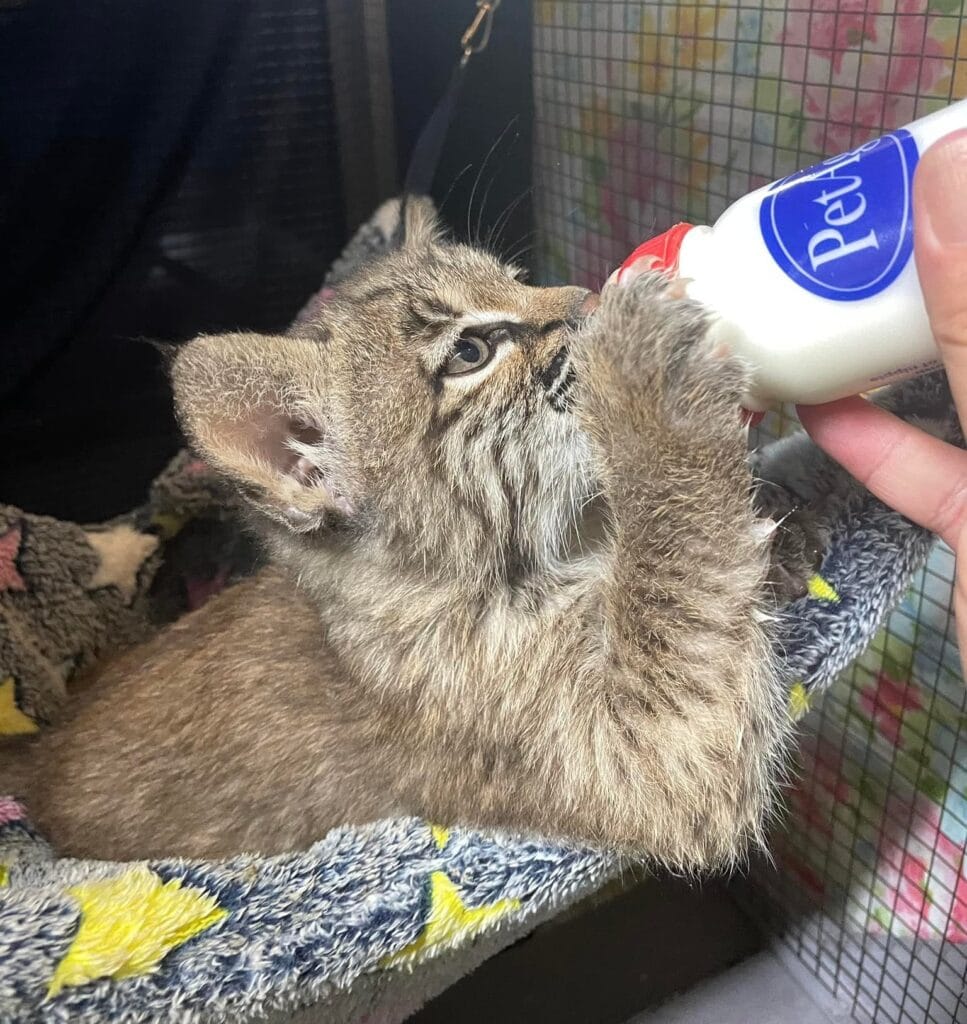
“Every wild animal has instincts for a reason,” King said. “When we take that away, even with love and care, we take away their future.
It’s not kindness, it’s confusion.”
Wild Heart Ranch continues to care for thousands of animals each year, from bobcats to raccoons and owls.
Their work depends entirely on public support, but King hopes that support comes in the right form, not from keeping wildlife at home, but by letting professionals do their job.
“The best thing anyone can do when they find an injured or orphaned wild animal is to call a licensed rehabber right away,” she said.
“Because the sooner we can help, the better chance that animal has to live free again.”
As for the young bobcat, her future finally looks a little wilder and that’s exactly how it should be.